
'We need to be ready': Waikīkī town hall focused on disaster preparedness, public safety
State lawmakers organized a town hall meeting to brief residents on condo insurance costs, disaster preparedness, and the use of law enforcement tech in Waikīkī and around Honolulu County.

From Honolulu, this is the High Tide Report. I’m Anthony Albidrez.
Red Cross of Hawaiʻi urges residents to be prepared for disasters. Condominium insurance costs are rising in Hawaiʻi for two particular reasons. Red light camera enforcement goes into effect. Law enforcement on the use of technology in Waikīkī and around the county. All that and more coming up.
Sen. Sharon Moriwaki and Rep. Adrian Tam hosted a community town hall last week at Jefferson Elementary School in Waikīkī. They brought agency leaders from the American Red Cross, the Hawaiʻi Insurance Division, the state Department of Transportation, and the state Department of Law Enforcement to brief residents on several issues, ideas, and projects.
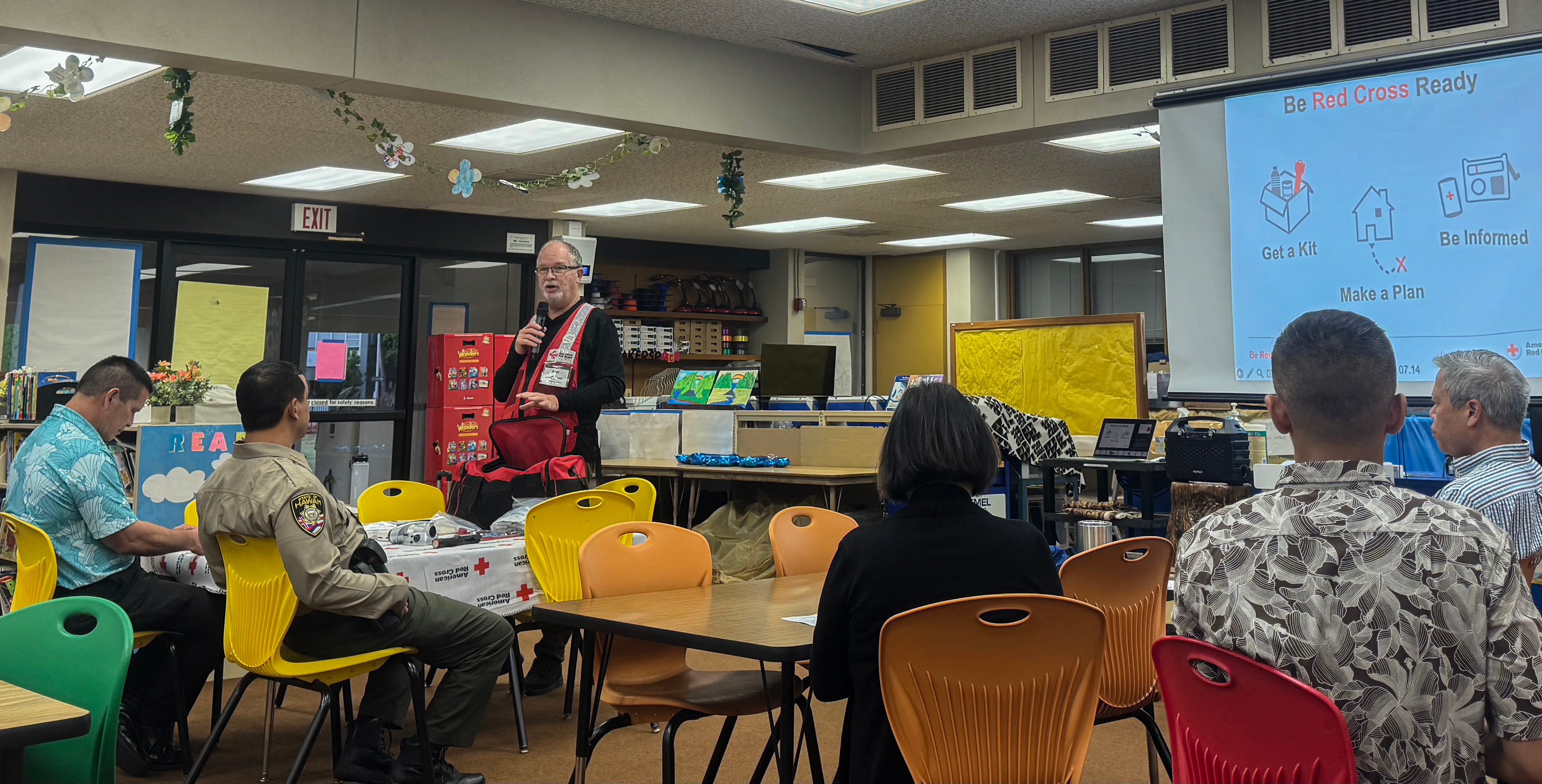
Disaster preparedness
Dan Anderson, preparedness specialist with the American Red Cross of Hawaiʻi, opened with a straightforward message: preparedness must happen before the sirens sound.
“We need to be better prepared than we’ve ever been before,” he said, urging households to make a plan with family, friends, and neighbors, especially vulnerable residents like senior citizens, as climate-driven disasters are increasing regionally and globally.
Tropical cyclone frequency is expected to increase, according to a National Oceanic and Atmospheric Administration study. Associated wind speeds, rainfall rates, and storm surge heights are projected to increase, according to the Fifth National Climate Assessment, while hotter and drier conditions are expanding wildfire risk and severity.
NOAA projects sea levels around Hawaiʻi could rise 1.5 feet by 2050, which would increase coastal flooding from high tide and storm surge events impacting low-lying neighborhoods like Waikīkī. Combined, these shifts mean storms, flooding, wildfire, and extreme heat are expected to collide more often, placing additional pressure on emergency response, insurance markets, and local infrastructure.
He emphasized learning evacuation routes and procedures, and the importance of creating an emergency to-go kit with food, water, and essential supplies, like medications. He walked residents through lessons learned from recent events, including the Lahaina fires and the tsunami evacuations.
High-rise residents may not always need to evacuate during a tsunami if they’re above certain floors and moving up at least four floors instead of immediately running out the door. During the tsunami event earlier this year, people evacuated when they did not need to. This backed up traffic out of Waikīkī and throughout Honolulu for hours, impacting emergency personnel response times.
“What we learned in Lahaina was that the radio is about the only communication that was really reliable,” he said, instructing to add a crank radio to emergency kits because communications can fail. He also flagged HNL Alert and the Red Cross app as core tools for information.
Anderson cautioned against complacency about wildfire risk in urban Honolulu. He said embers can travel roughly a mile on windy days, which matters for neighborhoods abutting slopes like Diamond Head.
Residents should not assume help will arrive immediately during a major disaster, Anderson warned.
“You may be on your own,” he said. “One of the major reasons for death, disaster and poor results is because we don’t have these conversations with our family, our friends, and our network.”
He closed with a concrete, near-term offer: The Red Cross offers free smoke-alarm installations statewide, stressing that home fires kill more people in Hawaiʻi than other natural hazards.
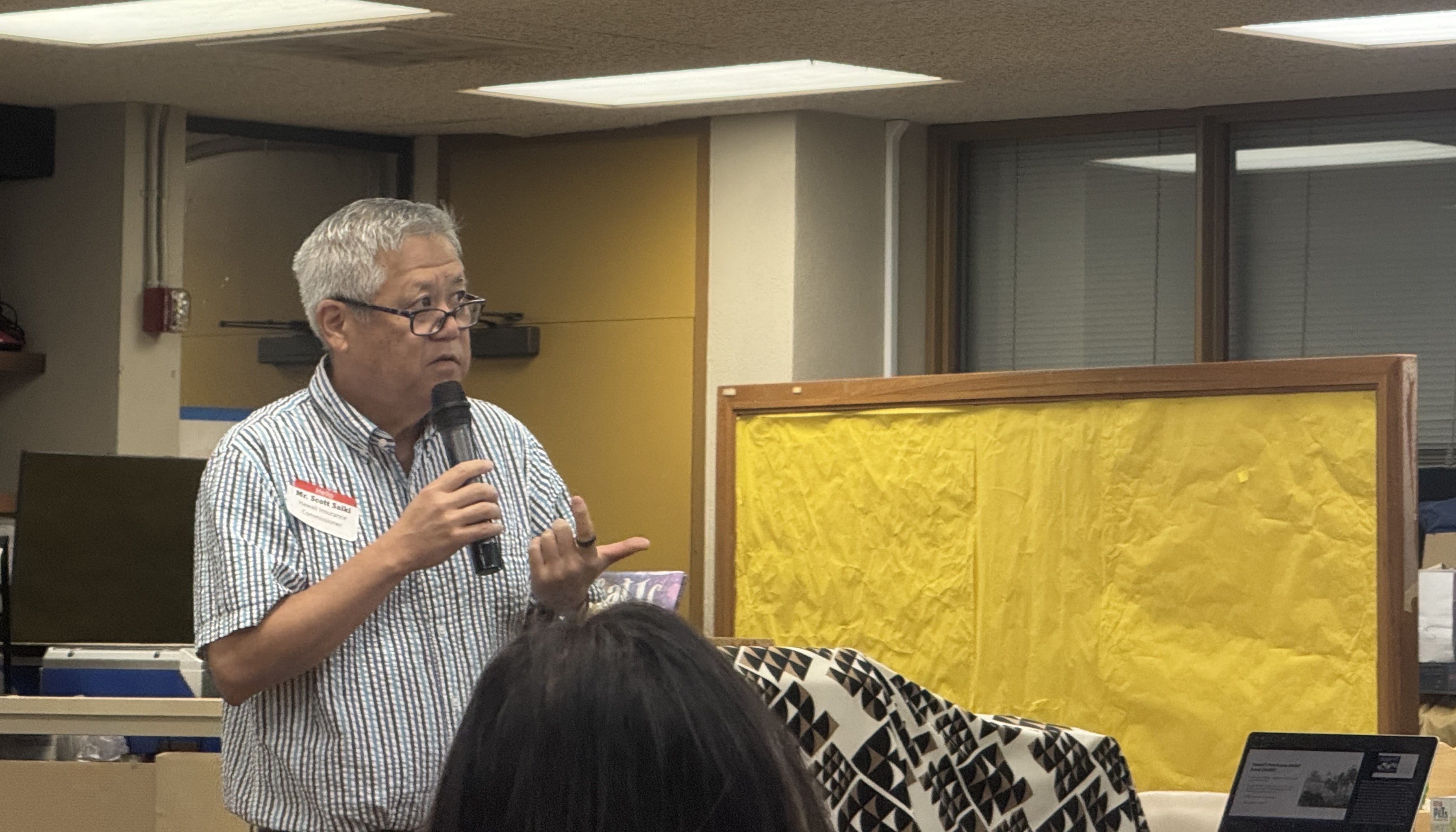
Condo insurance
Hawaiʻi Insurance Commissioner Scott Saiki said condo insurance premiums are rising for two reasons: disasters risk in Hawaiʻi and the cost of reinsurance.
“We have all the potential disasters here that causes insurance rates to spike, especially now with what is happening with our environment,” Saiki said. “Insurers are watching and modeling for environmental risks, and unfortunately, Lahaina put Hawaiʻi on the map as a potential risk factor.”
Reinsurance, the second notable driver in insurance cost, is essentially insurance that insurance companies buy for themselves to cover payouts for claims. When reinsurers raise their prices, insurance companies pass those increases down to condo associations and homeowners. Saiki said most reinsurers are based outside the United States and don’t fall under Hawaiʻi’s insurance regulations.
“Reinsurance companies are not regulated by the states because most of them are foreign companies. They are operating in places like the Cayman Islands, Bermuda, the UK,” Saiki said. “They can charge whatever they want for reinsurance.”
To ease the pressure, lawmakers passed Senate Bill 1044, signed into law as Act 296, that:
Reactivated the Hawaiʻi Hurricane Relief Fund, created a layer of condominium hurricane insurance up to $90 million.
Authorized the Hawaiʻi Property Insurance Association to provide non-hurricane condominium property insurance.
Created a condominium loan fund to assist with repair and maintenance.
Saiki said a building’s ability to get insurance also depends on whether it keeps up with maintenance, since it follows Fannie Mae and Freddie Mac guidelines. The condition and value of a building contributes to insurability.
During the town hall, a resident pushed back on the idea that disasters are the only factor. One longtime condo owner said poor oversight within associations is also a driver.
“Self-governance is a myth,” he said, arguing that without proper oversight, condo boards can ignore maintenance until repairs become expensive emergencies, thwarting a building’s ability to qualify for insurance.
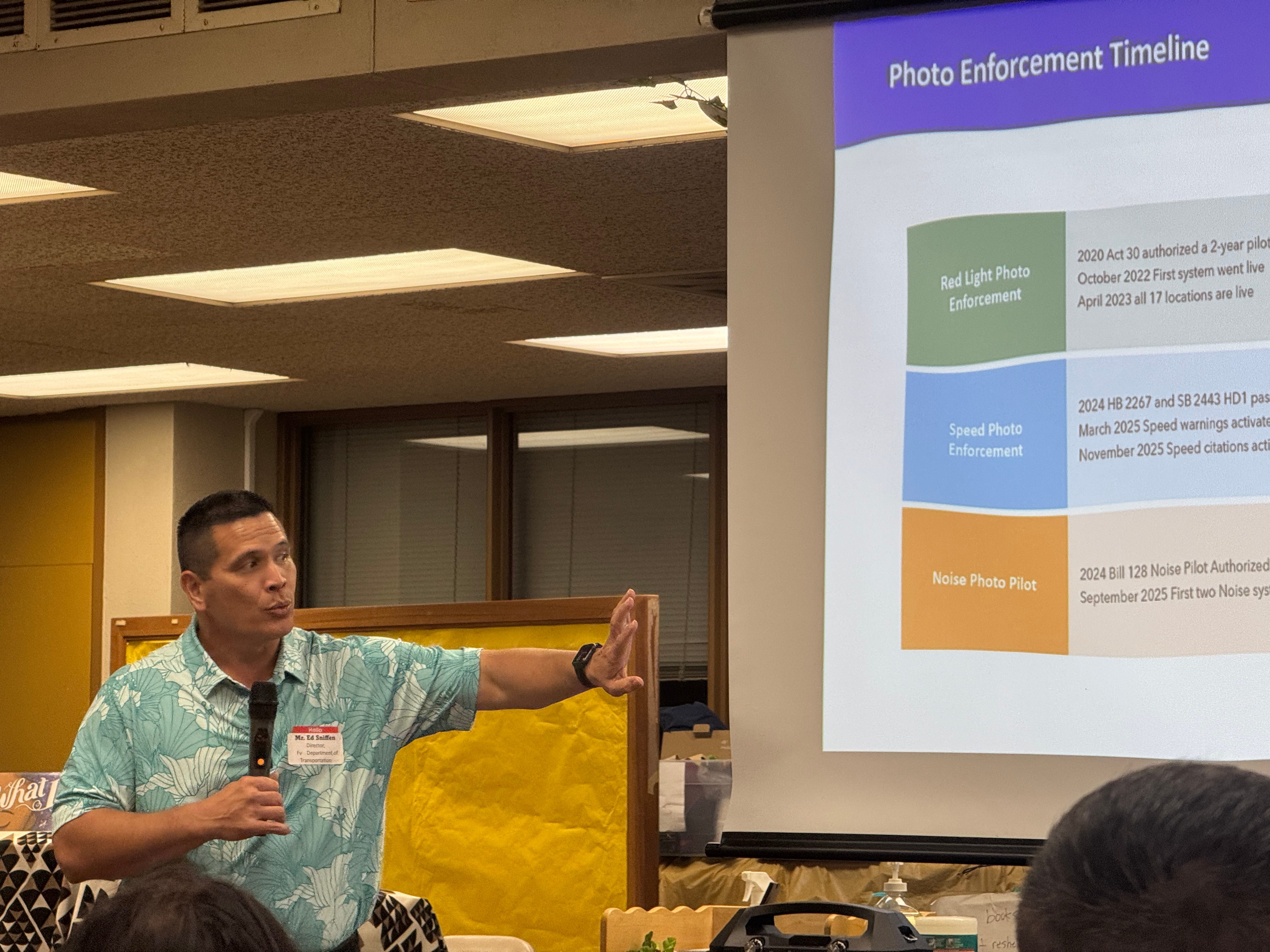
Law enforcement technology
Hawaiʻi Department of Transportation Director Ed Sniffen detailed three enforcement programs: red-light, speed, and noise cameras selected by crash and violation data and placed where courts can process cases. He said the goal is deterrence: camera locations are disclosed and warnings preceded citations.
Since red-light cameras went active, citations fell roughly 70% as behavior changed, Sniffen said. Crashes caused by red-light running at those intersections dropped about 75%, and overall crashes declined as well, he said. Speed enforcement, which ran an extended warning period, is now transitioning to citations, with an initial focus on the most dangerous violations to avoid overwhelming the courts while targeting risk.
On noise cameras, currently in a pilot phase, Sniffen said the devices can pinpoint the loud vehicle and capture audio/decibel readings for potential future enforcement, which would require legislative action to implement.
Sniffen underscored the stakes: 112 roadway deaths so far this year, statewide, with 93% linked to speed, impairment, or distraction.
“One-hundred people died for reasons that were absolutely 100% avoidable,” he said.
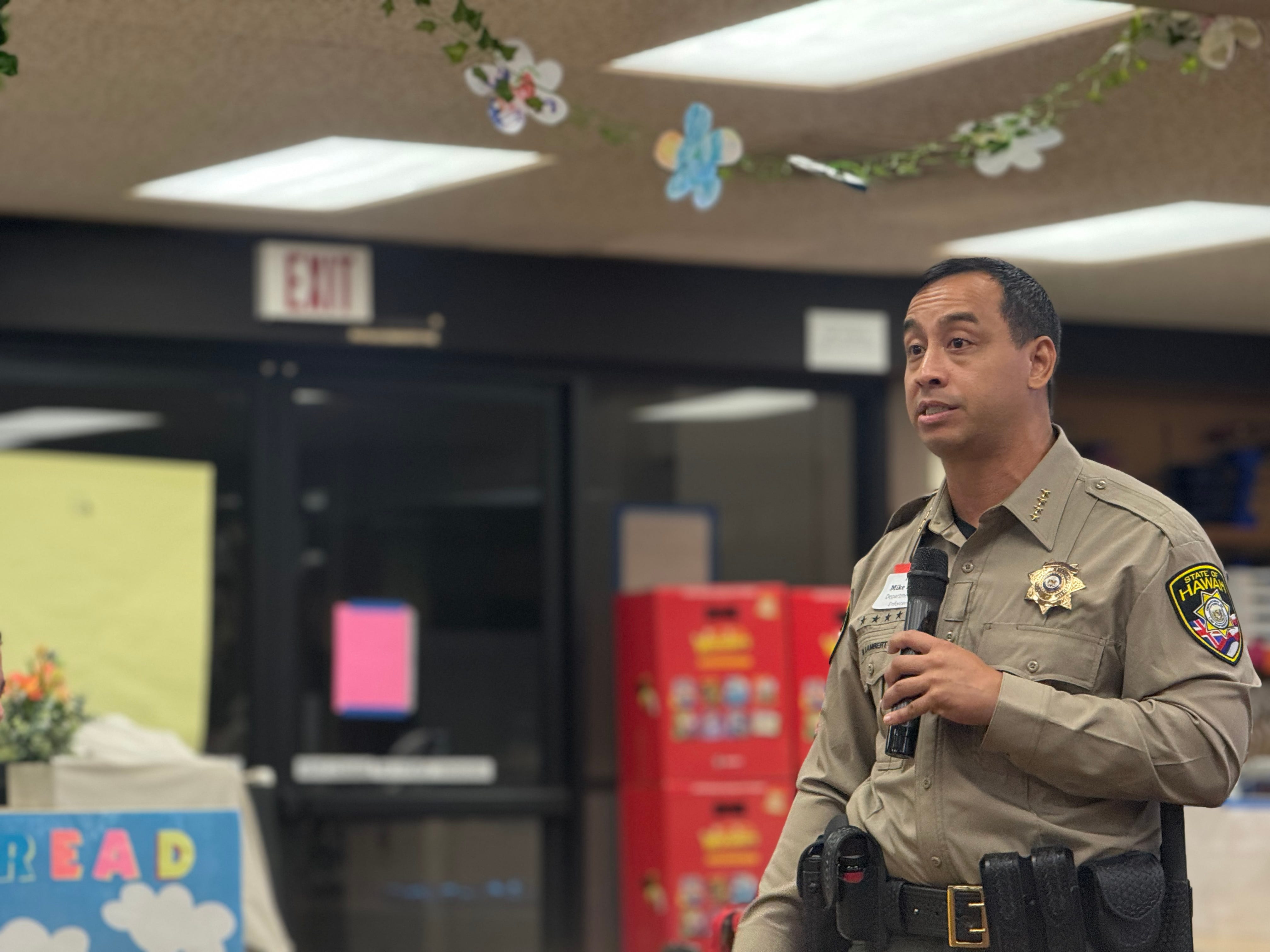
State Department of Law Enforcement Director Mike Lambert described technology meant to counter staffing shortages and speed up case work. He said Honolulu Police Department staffing is down about 20%, while 27% in sheriff shortages and technology can help cushion these shortages and to have more eyes on the ground to assist with traffic and speeding monitoring. Lambert also discussed ideas for license-plate readers for faster suspect vehicle alerts and drone as first responder deployments that can arrive in roughly 60–90 seconds to record scenes and reassure victims that help is en route, which Lambert said is enough to make suspects flee.
He explained how video search with AI can collapse hours of investigation work, for example, pulling every white truck that passed a camera near the time of a crime into a quick review package.
He addressed “Big Brother” concerns by stressing that compliant behavior blends into the background.
“If you’re not breaking the law, you’re just a piece of hay in the haystack,” Lambert said.
Consistent with the Red Cross, Lambert warned against broadcasting evacuations or stockpiled supplies on social media during crises because social media posts can invite burglary when neighborhoods are empty.
“Don’t brag about how prepared you are. Be discreet,” he said.
He also emphasized personal belongings should be an afterthought during a disaster event or evacuation. Getting household members to safety should be the priority during emergency situations
“What cannot be replaced are people,” Lambert said.
The transportation director noted a report will be released at the end of November that was influenced by the evacuation issues experienced during the tsunami in July. Sniffen said the report will outline how “we can better evacuate during those types of situations.”